25 Feb, 2025

Teddy Roosevelt thought that lawyers are trained to serve clients and not justice. An interesting discussion topic. Residential lending certainly has its share of legal proceedings and suits, but commercial lending does as well. For example, Wells Fargo is suing JPMorgan over a troubled $481 million commercial real estate loan made in 2019 to “recover losses for investors on the loan allegedly based on fraudulently inflated net operating income by 25 percent. According to the complaint in Manhattan federal court, JPMorgan went ahead with the loan, knowing it would eventually be sold in pieces to unwitting investors. The borrower defaulted in 2022 and still owes more than $285 million, while investors have lost tens of millions of dollars, Wells Fargo said. Wells Fargo wants New York-based JPMorgan to repurchase the loan, less amounts the trust received from sales of underlying properties, or else pay damages for breach of contract. In the residential world, the talk of repurchase requests by Freddie and Fannie has died down, but it is still a possibility and the cost of handling and defending against those requests, or dealing with repurchases, is certainly added to the cost of business for lenders. (Today’s podcast can be found here and this week’s is sponsored by TransUnion. TransUnion offers thousands of B2B solutions designed to address the unique needs of mortgage lenders, especially for their identity-focused, data-driven mortgage insights and solutions. Hear an interview with TRAiNED’s Jonathan Freed on what problems AI can solve in mortgage lending and how successful lenders are embracing it.)

25 Feb, 2025

Seemingly overnight (i.e. over the past 30 days when it comes to markets reacting to economic data), the CPI and PPI inflation numbers that normally impact bonds have been overlooked in favor of a handful of line items buried within each report.  The line items in question are those that impact the PCE price index (released 2 weeks from now). In today’s case, those specific line items pointed toward higher PCE inflation even though headline/core PPI inflation was lower than forecast. 

To recap, PCE is a more important inflation number than CPI or PPI, but CPI/PPI come out 2 weeks earlier and several of their components flow directly into the PCE calculation.  For the 2nd day in a row, those components were higher (bad for bonds), even though CPI/PPI came in lower. 

25 Feb, 2025

Why Aren’t Bonds Happier About CPI?

For the 2nd month in a row, the market’s reaction to a CPI/PPI report ended up being less about the report itself and more about its implications for the more highly regarded PCE inflation data. While we have to wait 2 weeks for official word on PCE, the CPI/PPI combination goes a long way toward revealing the outcome. In today’s case, CPI suggested higher PCE inflation, so bonds ended up selling off, albeit modestly, despite core CPI coming in lower than expected. Thursday’s PPI once again has the opportunity to punch above its typical weight for the same reason. 

Econ Data / Events

Core M/M CPI

0.2 vs 0.3  f’cast. 0.5 prev
unrounded 0.2266

Core Y/Y CPI

3.1 vs 3.2 f’cast, 3.3 prev

Market Movement Recap

09:31 AM Weaker overnight and mixed reaction to CPI (mostly ignored). MBS down 1 tick (0.03) and 10yr up 3.6bps at 4.316

12:46 PM MBS up 1 tick (.03) and 10yr up 2.8bps at 4.308

03:41 PM Fairly flat in the afternoon, despite some noise in both directions.  MBS are unchanged and 10yr yields are up 3.6bps at 4.317

25 Feb, 2025

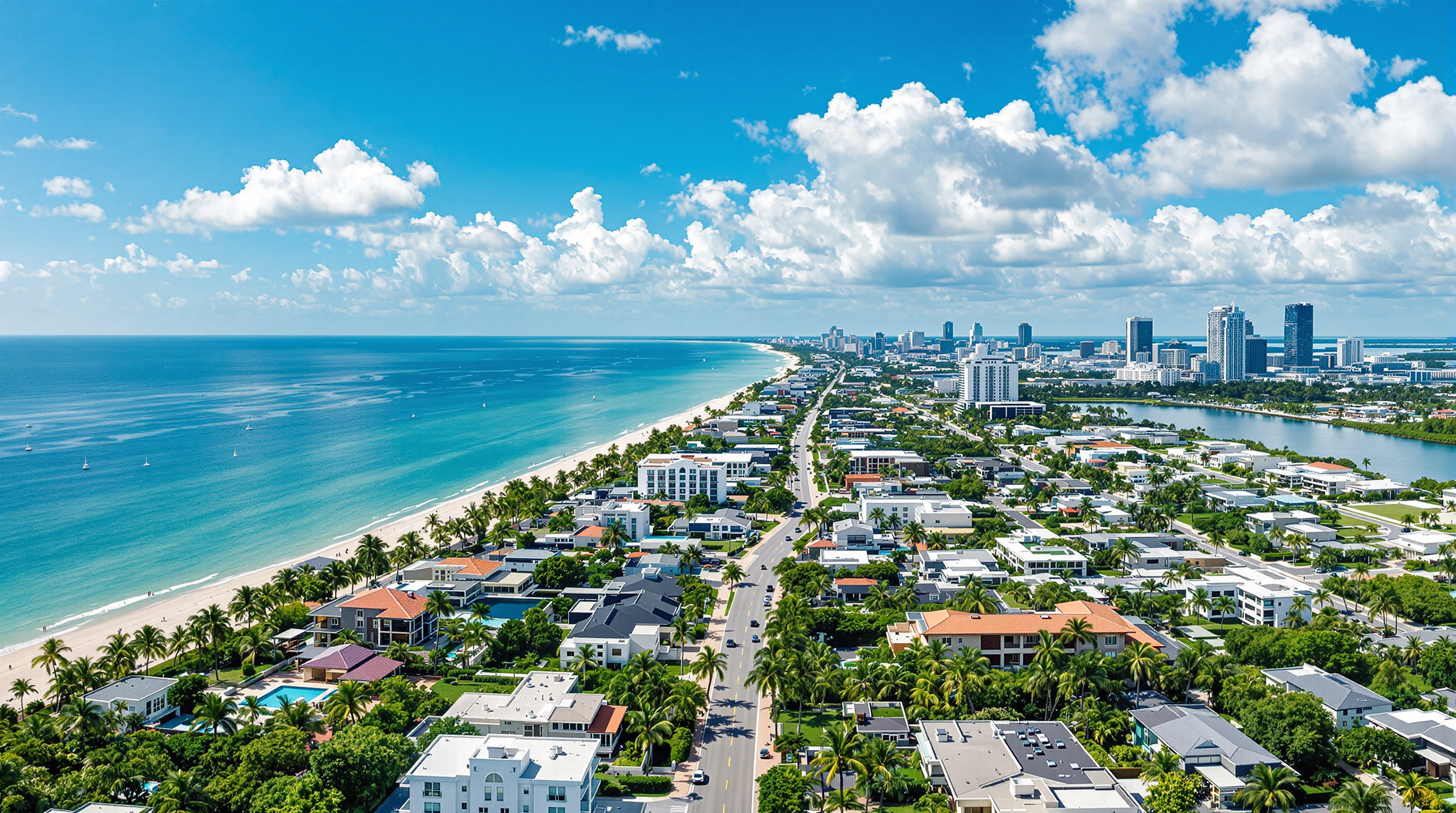
Florida property investment currently faces a complex market. Population growth continues, with Florida consistently ranking among the fastest-growing states, fueling demand. However, rising insurance costs pose a significant challenge; premiums are 3x the national average in some areas, impacting profitability. Property taxes are relatively stable, generally around 0.98% statewide. Tourism remains a powerful economic driver, supporting short-term rental income, though regulations vary by locality and are tightening in some cities. The median home price in Florida fluctuates but remains above the national average, reflecting the desirability and limited inventory in key areas. Interest rate hikes impact affordability and investment financing. Coastal properties face increased risks from climate change and rising sea levels, potentially affecting long-term value. Real estate appreciation rates have slowed compared to the pandemic boom, requiring careful market analysis. Focus should be on markets with diversified economies beyond tourism and areas with robust infrastructure investment.

25 Feb, 2025

Today’s CPI came in lower than expected. That would normally help bonds rally, but they didn’t seem too eager to do that. One explanation is that the components of CPI that have a bearing on PCE suggest PCE will be higher than previously expected. While we don’t usually see PCE move markets as much as CPI, that’s because PCE is much easier to forecast after CPI and PPI come out. As far as the Fed is concerned, PCE has the final say when it comes to measuring progress toward 2% inflation. As such, if today’s CPI says that PCE (2 weeks from now) looks like it will be higher than previously expected, the implication is for bond market weakness as opposed to strength.

25 Feb, 2025

Today’s CPI came in lower than expected. That would normally help bonds rally, but they didn’t seem too eager to do that. One explanation is that the components of CPI that have a bearing on PCE suggest PCE will be higher than previously expected. While we don’t usually see PCE move markets as much as CPI, that’s because PCE is much easier to forecast after CPI and PPI come out. As far as the Fed is concerned, PCE has the final say when it comes to measuring progress toward 2% inflation. As such, if today’s CPI says that PCE (2 weeks from now) looks like it will be higher than previously expected, the implication is for bond market weakness as opposed to strength.

25 Feb, 2025

Consolidation Continues Ahead of CPI

February 19th through March 3rd marked an exceptionally directional rally for bonds. The following day brought the big blow-up in German debt, and the start of the consolidation in US rates. Granted, if domestic economic data been weaker, the rally may have tried to soldier on, but after the jobs report came out near consensus, that was that.  As has been the case for several years, the next major report after the jobs report is CPI, and CPI is arguably even more important at the moment.  This isn’t to say we’re guaranteed to see a big reaction–only that the potential is there, should the data come in much higher or lower than forecast.  As for today, it was just another in the ongoing consolidation with bonds determined to move back to the higher end of the recent sideways range after moving lower yesterday.

Econ Data / Events

Job Openings

7.74m vs 7.63m f’cast, 7.508m prev

Job Quits (higher is worse for bonds)

3.266m vs 3.197m prev

Market Movement Recap

09:39 AM Initially stronger early in the overnight session, then selling steadily.  MBS down just over an eighth of a point.  10yr up 2.2bps at 4.232

01:29 PM Weaker into the PM hours but leveling off now.  MBS down an eighth on the day and 10yr up 1.5bps at 4.227

02:26 PM 10yr yields are up 6.5bps at the highs of the day (4.276).  MBS down 10 ticks (.31)

25 Feb, 2025

Properties with professional real estate photography sell 32% faster. Listings with high-quality photos receive 118% more online views. Homes listed between $200,000 and $1 million sell for $3,000-$11,000 more with professional photography. 83% of buyers said pictures were very important in helping them choose which homes to visit. 80% of homebuyers use the internet to search for homes. HDR photography is preferred by 90% of real estate agents. Drone photography can increase perceived property value by showcasing location and amenities. Vacant homes can benefit significantly from virtual staging integrated with professional photography, potentially increasing offers by up to 25%.

25 Feb, 2025

With fiscal and geopolitical developments dominating the news cycle, it would be easy to forget that interest rates prefer to take their primary cues from economic data.  This is an important reminder considering tomorrow morning brings one of the most closely watched economic reports: the Consumer Price Index (CPI). CPI is one of only a few inflation reports from the U.S. government. It is also the out 2 weeks earlier than its only real competitor. Because of that, and the fact that rates are greatly impact by inflation, CPI is one of the biggest potential sources of rate volatility. There are certainly other economic reports that matter.  Even today’s Job Openings data managed to cause small scale volatility this morning, but CPI is  far more capable.  As always, in order to have a truly big impact on rates, the data would need to come in much higher or lower than forecast, and there’s no way to know where it will come in ahead of time (economists have already done their best to forecast that).  As for today, stock market fluctuations proved to be a bigger influence than the Job Openings data, ultimately pushing rates slightly higher compared to yesterday’s latest levels.

25 Feb, 2025

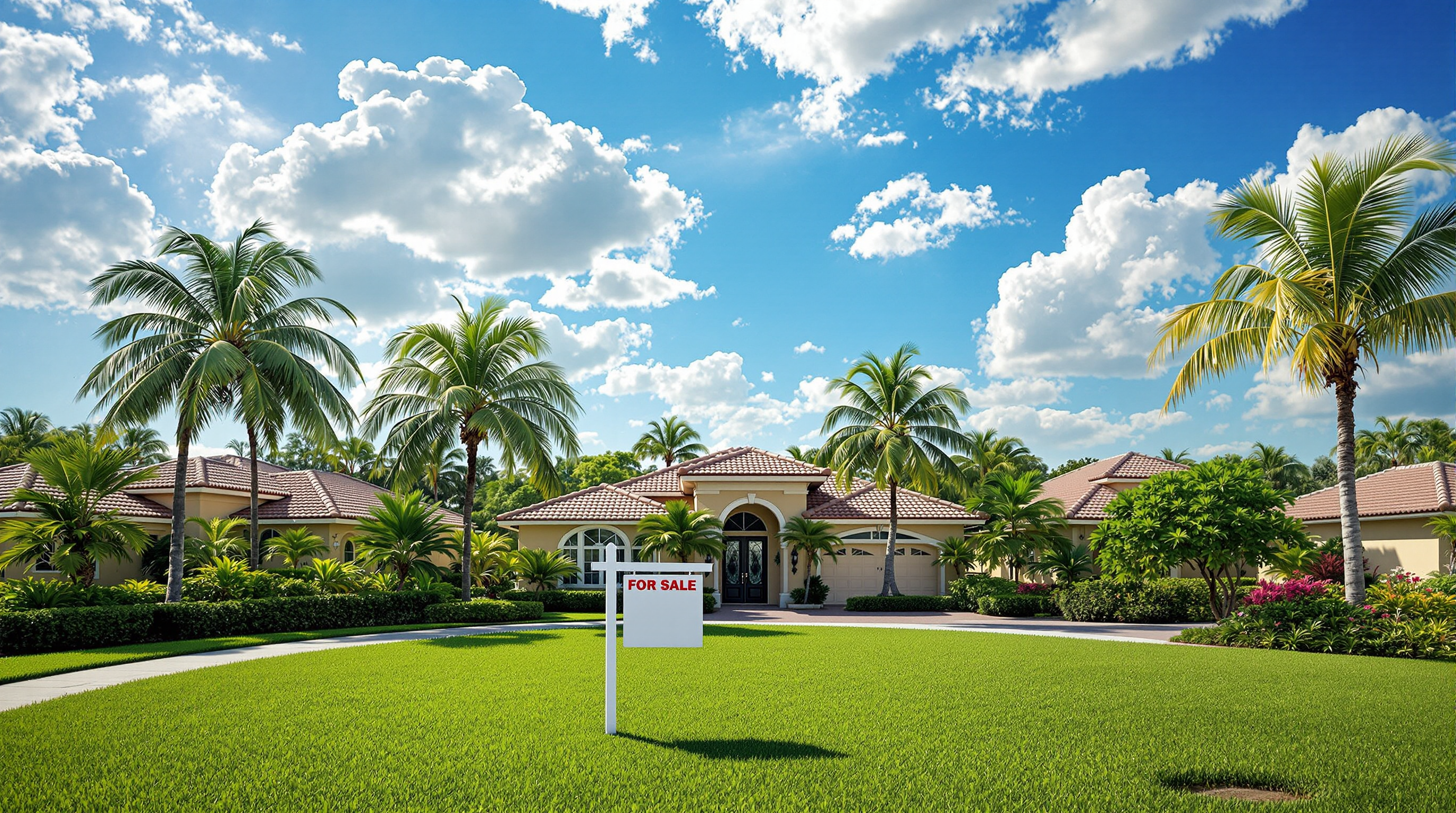
Florida homeownership faces unique challenges: hurricane risk (requiring specialized insurance), fluctuating property values tied to tourism, and a complex real estate market.

Key facts:

* **Median Home Price:** ~$400,000 (fluctuates greatly by region).
* **Property Taxes:** Average effective rate ~0.84% but varies by county; homestead exemption provides tax relief for primary residences.
* **Insurance:** Homeowners insurance is significantly higher than the national average due to hurricane risk. Flood insurance is often required separately.
* **Down Payment Assistance:** Numerous state and local programs exist for first-time buyers, often with income restrictions.
* **Mortgage Rates:** Influenced by national trends but may have slightly higher rates in some regions due to perceived risk.
* **Popular Areas:** Coastal areas (high demand, high prices), Central Florida (growth, more affordable), and the Panhandle (varied, often hurricane-prone).
* **Closing Costs:** Typically 2-5% of the purchase price.
* **Legal Framework:** Florida is a title insurance state, requiring title searches to ensure clear ownership.
* **Key Insight:** Understanding local market conditions and navigating insurance requirements are crucial for successful homeownership.