25 Feb, 2025

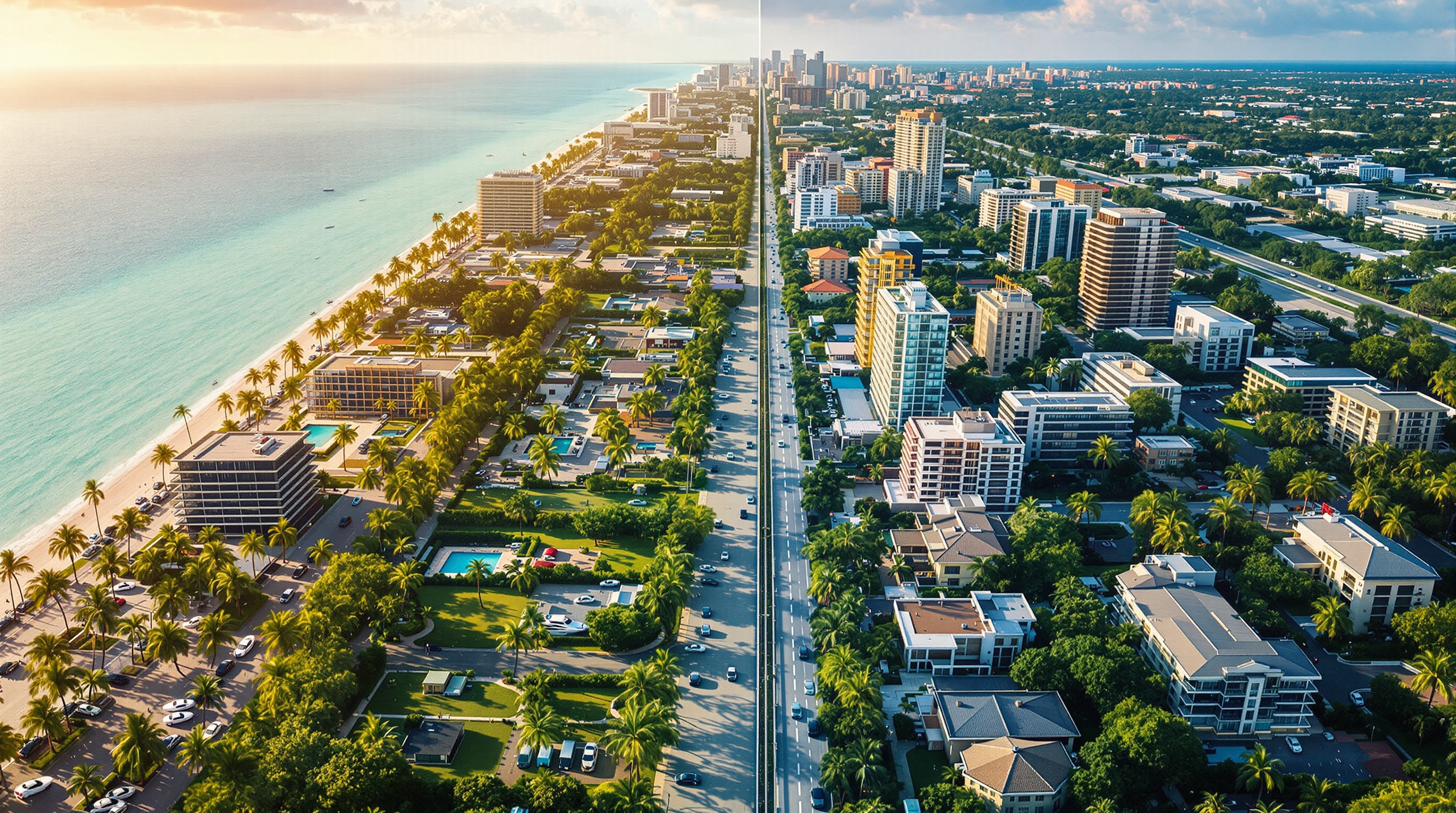
Florida’s real estate market is currently shaped by:

* **High Demand & Limited Inventory:** Fueled by population growth and migration, especially from high-tax states. Inventory remains constrained, driving up prices in many areas.
* **Population Growth:** Florida gained an estimated 365,205 residents between 2022 and 2023, maintaining its position as one of the fastest-growing states.
* **Rising Insurance Costs:** A major headwind, with property insurance premiums significantly higher than the national average, impacting affordability and investment returns. Some areas see average annual premiums exceeding $6,000.
* **Interest Rate Fluctuations:** Federal Reserve rate hikes influence mortgage rates, impacting buyer affordability and transaction volume. Monitor the 10-year treasury yield as a leading indicator.
* **Regional Variations:** The market varies significantly by region. Coastal areas face higher insurance costs and potential climate change impacts, while inland areas may offer more affordable opportunities.
* **Investment Strategies:** Successful strategies involve focusing on cash flow properties, value-add opportunities (renovation), and identifying underserved markets. Short-term rentals face increasing regulation in some localities.
* **Affordability Crisis:** Despite high demand, affordability is a growing concern for residents, impacting entry-level buyers.
* **Economic Factors:** The strength of Florida’s tourism industry and overall economy plays a crucial role in market stability.
* **Construction Costs:** High construction costs and labor shortages impact new development and renovation projects.
* **Florida ranks high on lists of states people are moving *from* as well as moving *to*, showing that more are moving out of state than moving into Florida.**
25 Feb, 2025

* **Popular Loan Types:** Conventional (most common), FHA (low down payment), VA (military), USDA (rural areas).
* **Conventional Loans:** Require strong credit (620+ FICO), down payments typically 3-20%, may require PMI if down payment is <20%. * **FHA Loans:** Lower credit score requirements (as low as 500 with 10% down, 580 for 3.5% down), require upfront and annual mortgage insurance premiums (MIP). * **VA Loans:** No down payment required (for eligible veterans), no PMI, but have a funding fee. * **USDA Loans:** For eligible rural and suburban homebuyers, no down payment required, income limits apply. * **Florida First-Time Homebuyer Programs:** Offer down payment and closing cost assistance; income and purchase price limits apply. * **Interest Rates:** Influenced by credit score, loan type, and the overall economic climate. * **Average Interest Rate (approximate, fluctuates):** 6-7% for a 30-year fixed-rate mortgage as of late 2023/early 2024 (subject to change). * **Key Factors to Consider:** Down payment ability, credit score, debt-to-income ratio (DTI), long-term financial goals. * **Refinancing:** Can lower monthly payments or shorten loan term, consider closing costs and break-even point.

25 Feb, 2025

* **Popular Loan Types:** Conventional (most common), FHA (low down payment), VA (military), USDA (rural areas).
* **Conventional Loans:** Require strong credit (620+ FICO), down payments typically 3-20%, may require PMI if down payment is <20%. * **FHA Loans:** Lower credit score requirements (as low as 500 with 10% down, 580 for 3.5% down), require upfront and annual mortgage insurance premiums (MIP). * **VA Loans:** No down payment required (for eligible veterans), no PMI, but have a funding fee. * **USDA Loans:** For eligible rural and suburban homebuyers, no down payment required, income limits apply. * **Florida First-Time Homebuyer Programs:** Offer down payment and closing cost assistance; income and purchase price limits apply. * **Interest Rates:** Influenced by credit score, loan type, and the overall economic climate. * **Average Interest Rate (approximate, fluctuates):** 6-7% for a 30-year fixed-rate mortgage as of late 2023/early 2024 (subject to change). * **Key Factors to Consider:** Down payment ability, credit score, debt-to-income ratio (DTI), long-term financial goals. * **Refinancing:** Can lower monthly payments or shorten loan term, consider closing costs and break-even point.

25 Feb, 2025

* **Homeownership Rate:** Florida’s homeownership rate is approximately 67% (fluctuates based on source and year).
* **Affordability Crisis:** Florida faces a housing affordability crisis, with rising home prices and insurance rates impacting accessibility.
* **Key Questions:**
* **Financial Readiness:** Can you afford the down payment, closing costs, property taxes, insurance, and ongoing maintenance?
* **Budgeting:** Have you created a realistic budget that includes all homeownership-related expenses?
* **Credit Score:** A good credit score is essential for securing a favorable mortgage rate.
* **Location:** Have you researched different neighborhoods and considered factors like schools, commute times, and safety?
* **Long-Term Plans:** How long do you plan to stay in the home?
* **Insurance Costs:** Florida has some of the highest homeowner’s insurance rates in the nation, influenced by hurricane risk.
* **Property Taxes:** Property taxes vary by county and municipality in Florida.
* **Mortgage Pre-Approval:** Getting pre-approved for a mortgage is crucial before starting the home search.
* **Hidden Costs:** Be aware of potential hidden costs such as HOA fees, pest control, and unexpected repairs.
* **Market Fluctuations:** Florida’s real estate market can be volatile.
* **First-Time Homebuyer Programs:** Explore available first-time homebuyer programs and assistance.

25 Feb, 2025

* **Market Shift:** Florida’s real estate market is transitioning from a seller’s market to a more balanced or buyer’s market in many areas.
* **Inventory Increase:** Statewide, housing inventory is significantly higher than previous years, leading to increased competition among sellers.
* **Days on Market (DOM):** Average days on market are increasing, indicating homes are taking longer to sell.
* **Price Reductions:** A higher percentage of listings are experiencing price reductions, suggesting sellers need to price competitively.
* **Professional Photography/Virtual Tours:** High-quality visuals are critical for attracting online buyers.
* **Staging Importance:** Staging homes effectively can help them stand out and command higher offers.
* **Negotiation Skills:** Sellers must be prepared to negotiate offers and potentially make concessions.
* **Appraisal Gaps:** Increased likelihood of appraisal gaps, requiring sellers to be flexible or buyers to cover the difference.
* **Seller Disclosures:** Full and accurate property disclosures are essential to avoid legal issues.
* **Interest Rate Impact:** Rising interest rates are affecting buyer affordability and demand.
* **Property Taxes & Insurance:** High insurance costs and increasing property taxes impact affordability for potential buyers.

25 Feb, 2025

Florida’s homeownership rate hovers around 68%, slightly below the national average. First-time homebuyers should budget for closing costs, typically 2-5% of the purchase price. Property taxes average around 0.97% of assessed value annually. Homeowners insurance is significantly higher than the national average, influenced by hurricane risk and averaging over $6,000 per year in some coastal areas. Flood insurance is often required, especially in high-risk zones, and is separate from homeowner’s insurance. Common home maintenance costs in Florida include AC maintenance ($150-$300 annually), lawn care ($100-$200 monthly), and potential roof repairs due to storm damage. Homestead exemption can significantly reduce property taxes for primary residences, up to $50,000 in some counties. Down payment assistance programs are available for eligible first-time buyers and can provide up to $15,000 in assistance.

25 Feb, 2025

* **Increased Tech Adoption:** Florida homebuyers and sellers are increasingly relying on technology throughout the real estate process, impacting property searches, virtual tours, and transaction management.
* **Online Portals Dominance:** Zillow, Realtor.com, and Trulia are primary starting points for property searches, used by over 80% of buyers in some Florida markets.
* **Virtual Tours & 3D Models:** Virtual tours are now expected, with listings featuring them receiving up to 50% more interest. 3D models create immersive experiences that can attract remote buyers.
* **Mobile-First Approach:** Over 70% of buyers search for homes on mobile devices, emphasizing the need for mobile-friendly websites and apps for agents and brokerages.
* **E-Signatures & Online Closings:** Electronic signatures are widely accepted, streamlining paperwork. Remote online notarization (RON) is permitted in Florida, enabling fully digital closings in certain situations.
* **Data-Driven Insights:** Real estate professionals are leveraging data analytics tools to provide clients with accurate market information, pricing strategies, and investment advice.
* **Smart Home Technology Integration:** Buyers value smart home features, with listings showcasing such features potentially commanding higher prices in certain sub-markets.
* **Cybersecurity Concerns:** Increased online activity raises cybersecurity risks; buyers and sellers should use secure platforms and be wary of phishing scams.
* **iBuyers and Alternative Models:** iBuyers, while present, have had varied success in Florida. Sellers should carefully weigh the pros and cons of instant offers versus traditional sales.
* **Agent Reliance Still Strong:** Despite tech advancements, most buyers and sellers still rely on a real estate agent’s expertise, indicating technology complements, rather than replaces, human interaction.

25 Feb, 2025

Florida homeownership requires careful planning. The median home price in Florida was around $400,000 in late 2023. A down payment of at least 3-5% is often needed, with 20% preferred to avoid Private Mortgage Insurance (PMI). Credit score is crucial, ideally above 740 to secure the best mortgage rates. Closing costs typically range from 2-5% of the loan amount. Factor in ongoing expenses like property taxes, homeowner’s insurance (average $6,000 annually), and potential HOA fees. Florida experiences higher-than-average risk of hurricanes, impacting insurance costs and requiring wind mitigation measures.