25 Feb, 2025

* **Homeownership Rate:** Florida’s homeownership rate is approximately 67% (fluctuates based on source and year).
* **Affordability Crisis:** Florida faces a housing affordability crisis, with rising home prices and insurance rates impacting accessibility.
* **Key Questions:**
* **Financial Readiness:** Can you afford the down payment, closing costs, property taxes, insurance, and ongoing maintenance?
* **Budgeting:** Have you created a realistic budget that includes all homeownership-related expenses?
* **Credit Score:** A good credit score is essential for securing a favorable mortgage rate.
* **Location:** Have you researched different neighborhoods and considered factors like schools, commute times, and safety?
* **Long-Term Plans:** How long do you plan to stay in the home?
* **Insurance Costs:** Florida has some of the highest homeowner’s insurance rates in the nation, influenced by hurricane risk.
* **Property Taxes:** Property taxes vary by county and municipality in Florida.
* **Mortgage Pre-Approval:** Getting pre-approved for a mortgage is crucial before starting the home search.
* **Hidden Costs:** Be aware of potential hidden costs such as HOA fees, pest control, and unexpected repairs.
* **Market Fluctuations:** Florida’s real estate market can be volatile.
* **First-Time Homebuyer Programs:** Explore available first-time homebuyer programs and assistance.


25 Feb, 2025

* **Popular Loan Types:** Conventional (most common), FHA (low down payment), VA (military), USDA (rural areas).
* **Conventional Loans:** Require strong credit (620+ FICO), down payments typically 3-20%, may require PMI if down payment is <20%. * **FHA Loans:** Lower credit score requirements (as low as 500 with 10% down, 580 for 3.5% down), require upfront and annual mortgage insurance premiums (MIP). * **VA Loans:** No down payment required (for eligible veterans), no PMI, but have a funding fee. * **USDA Loans:** For eligible rural and suburban homebuyers, no down payment required, income limits apply. * **Florida First-Time Homebuyer Programs:** Offer down payment and closing cost assistance; income and purchase price limits apply. * **Interest Rates:** Influenced by credit score, loan type, and the overall economic climate. * **Average Interest Rate (approximate, fluctuates):** 6-7% for a 30-year fixed-rate mortgage as of late 2023/early 2024 (subject to change). * **Key Factors to Consider:** Down payment ability, credit score, debt-to-income ratio (DTI), long-term financial goals. * **Refinancing:** Can lower monthly payments or shorten loan term, consider closing costs and break-even point.

25 Feb, 2025

* **Popular Loan Types:** Conventional (most common), FHA (low down payment), VA (military), USDA (rural areas).
* **Conventional Loans:** Require strong credit (620+ FICO), down payments typically 3-20%, may require PMI if down payment is <20%. * **FHA Loans:** Lower credit score requirements (as low as 500 with 10% down, 580 for 3.5% down), require upfront and annual mortgage insurance premiums (MIP). * **VA Loans:** No down payment required (for eligible veterans), no PMI, but have a funding fee. * **USDA Loans:** For eligible rural and suburban homebuyers, no down payment required, income limits apply. * **Florida First-Time Homebuyer Programs:** Offer down payment and closing cost assistance; income and purchase price limits apply. * **Interest Rates:** Influenced by credit score, loan type, and the overall economic climate. * **Average Interest Rate (approximate, fluctuates):** 6-7% for a 30-year fixed-rate mortgage as of late 2023/early 2024 (subject to change). * **Key Factors to Consider:** Down payment ability, credit score, debt-to-income ratio (DTI), long-term financial goals. * **Refinancing:** Can lower monthly payments or shorten loan term, consider closing costs and break-even point.

25 Feb, 2025

Florida’s real estate market is currently shaped by:

* **High Demand & Limited Inventory:** Fueled by population growth and migration, especially from high-tax states. Inventory remains constrained, driving up prices in many areas.
* **Population Growth:** Florida gained an estimated 365,205 residents between 2022 and 2023, maintaining its position as one of the fastest-growing states.
* **Rising Insurance Costs:** A major headwind, with property insurance premiums significantly higher than the national average, impacting affordability and investment returns. Some areas see average annual premiums exceeding $6,000.
* **Interest Rate Fluctuations:** Federal Reserve rate hikes influence mortgage rates, impacting buyer affordability and transaction volume. Monitor the 10-year treasury yield as a leading indicator.
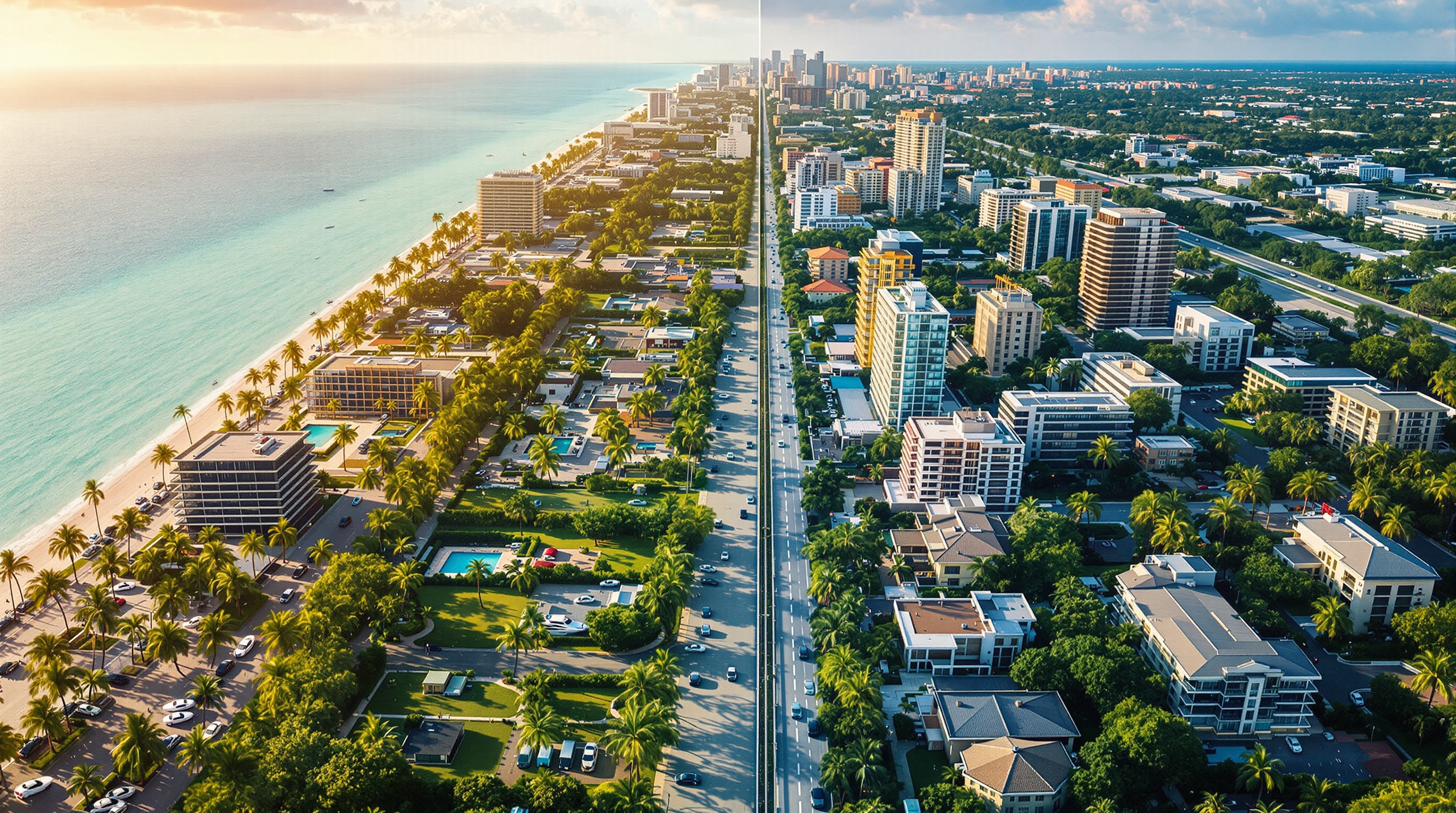
* **Regional Variations:** The market varies significantly by region. Coastal areas face higher insurance costs and potential climate change impacts, while inland areas may offer more affordable opportunities.
* **Investment Strategies:** Successful strategies involve focusing on cash flow properties, value-add opportunities (renovation), and identifying underserved markets. Short-term rentals face increasing regulation in some localities.
* **Affordability Crisis:** Despite high demand, affordability is a growing concern for residents, impacting entry-level buyers.
* **Economic Factors:** The strength of Florida’s tourism industry and overall economy plays a crucial role in market stability.
* **Construction Costs:** High construction costs and labor shortages impact new development and renovation projects.
* **Florida ranks high on lists of states people are moving *from* as well as moving *to*, showing that more are moving out of state than moving into Florida.**

25 Feb, 2025

Florida homeownership faces unique challenges: hurricane risk (requiring specialized insurance), fluctuating property values tied to tourism, and a complex real estate market.

Key facts:

* **Median Home Price:** ~$400,000 (fluctuates greatly by region).
* **Property Taxes:** Average effective rate ~0.84% but varies by county; homestead exemption provides tax relief for primary residences.
* **Insurance:** Homeowners insurance is significantly higher than the national average due to hurricane risk. Flood insurance is often required separately.
* **Down Payment Assistance:** Numerous state and local programs exist for first-time buyers, often with income restrictions.
* **Mortgage Rates:** Influenced by national trends but may have slightly higher rates in some regions due to perceived risk.
* **Popular Areas:** Coastal areas (high demand, high prices), Central Florida (growth, more affordable), and the Panhandle (varied, often hurricane-prone).
* **Closing Costs:** Typically 2-5% of the purchase price.
* **Legal Framework:** Florida is a title insurance state, requiring title searches to ensure clear ownership.
* **Key Insight:** Understanding local market conditions and navigating insurance requirements are crucial for successful homeownership.

25 Feb, 2025

With fiscal and geopolitical developments dominating the news cycle, it would be easy to forget that interest rates prefer to take their primary cues from economic data.  This is an important reminder considering tomorrow morning brings one of the most closely watched economic reports: the Consumer Price Index (CPI). CPI is one of only a few inflation reports from the U.S. government. It is also the out 2 weeks earlier than its only real competitor. Because of that, and the fact that rates are greatly impact by inflation, CPI is one of the biggest potential sources of rate volatility. There are certainly other economic reports that matter.  Even today’s Job Openings data managed to cause small scale volatility this morning, but CPI is  far more capable.  As always, in order to have a truly big impact on rates, the data would need to come in much higher or lower than forecast, and there’s no way to know where it will come in ahead of time (economists have already done their best to forecast that).  As for today, stock market fluctuations proved to be a bigger influence than the Job Openings data, ultimately pushing rates slightly higher compared to yesterday’s latest levels.

25 Feb, 2025

Properties with professional real estate photography sell 32% faster. Listings with high-quality photos receive 118% more online views. Homes listed between $200,000 and $1 million sell for $3,000-$11,000 more with professional photography. 83% of buyers said pictures were very important in helping them choose which homes to visit. 80% of homebuyers use the internet to search for homes. HDR photography is preferred by 90% of real estate agents. Drone photography can increase perceived property value by showcasing location and amenities. Vacant homes can benefit significantly from virtual staging integrated with professional photography, potentially increasing offers by up to 25%.

25 Feb, 2025

Consolidation Continues Ahead of CPI

February 19th through March 3rd marked an exceptionally directional rally for bonds. The following day brought the big blow-up in German debt, and the start of the consolidation in US rates. Granted, if domestic economic data been weaker, the rally may have tried to soldier on, but after the jobs report came out near consensus, that was that.  As has been the case for several years, the next major report after the jobs report is CPI, and CPI is arguably even more important at the moment.  This isn’t to say we’re guaranteed to see a big reaction–only that the potential is there, should the data come in much higher or lower than forecast.  As for today, it was just another in the ongoing consolidation with bonds determined to move back to the higher end of the recent sideways range after moving lower yesterday.

Econ Data / Events

Job Openings

7.74m vs 7.63m f’cast, 7.508m prev

Job Quits (higher is worse for bonds)

3.266m vs 3.197m prev

Market Movement Recap

09:39 AM Initially stronger early in the overnight session, then selling steadily.  MBS down just over an eighth of a point.  10yr up 2.2bps at 4.232

01:29 PM Weaker into the PM hours but leveling off now.  MBS down an eighth on the day and 10yr up 1.5bps at 4.227

02:26 PM 10yr yields are up 6.5bps at the highs of the day (4.276).  MBS down 10 ticks (.31)

25 Feb, 2025

Today’s CPI came in lower than expected. That would normally help bonds rally, but they didn’t seem too eager to do that. One explanation is that the components of CPI that have a bearing on PCE suggest PCE will be higher than previously expected. While we don’t usually see PCE move markets as much as CPI, that’s because PCE is much easier to forecast after CPI and PPI come out. As far as the Fed is concerned, PCE has the final say when it comes to measuring progress toward 2% inflation. As such, if today’s CPI says that PCE (2 weeks from now) looks like it will be higher than previously expected, the implication is for bond market weakness as opposed to strength.

25 Feb, 2025

Today’s CPI came in lower than expected. That would normally help bonds rally, but they didn’t seem too eager to do that. One explanation is that the components of CPI that have a bearing on PCE suggest PCE will be higher than previously expected. While we don’t usually see PCE move markets as much as CPI, that’s because PCE is much easier to forecast after CPI and PPI come out. As far as the Fed is concerned, PCE has the final say when it comes to measuring progress toward 2% inflation. As such, if today’s CPI says that PCE (2 weeks from now) looks like it will be higher than previously expected, the implication is for bond market weakness as opposed to strength.