26 Apr, 2025

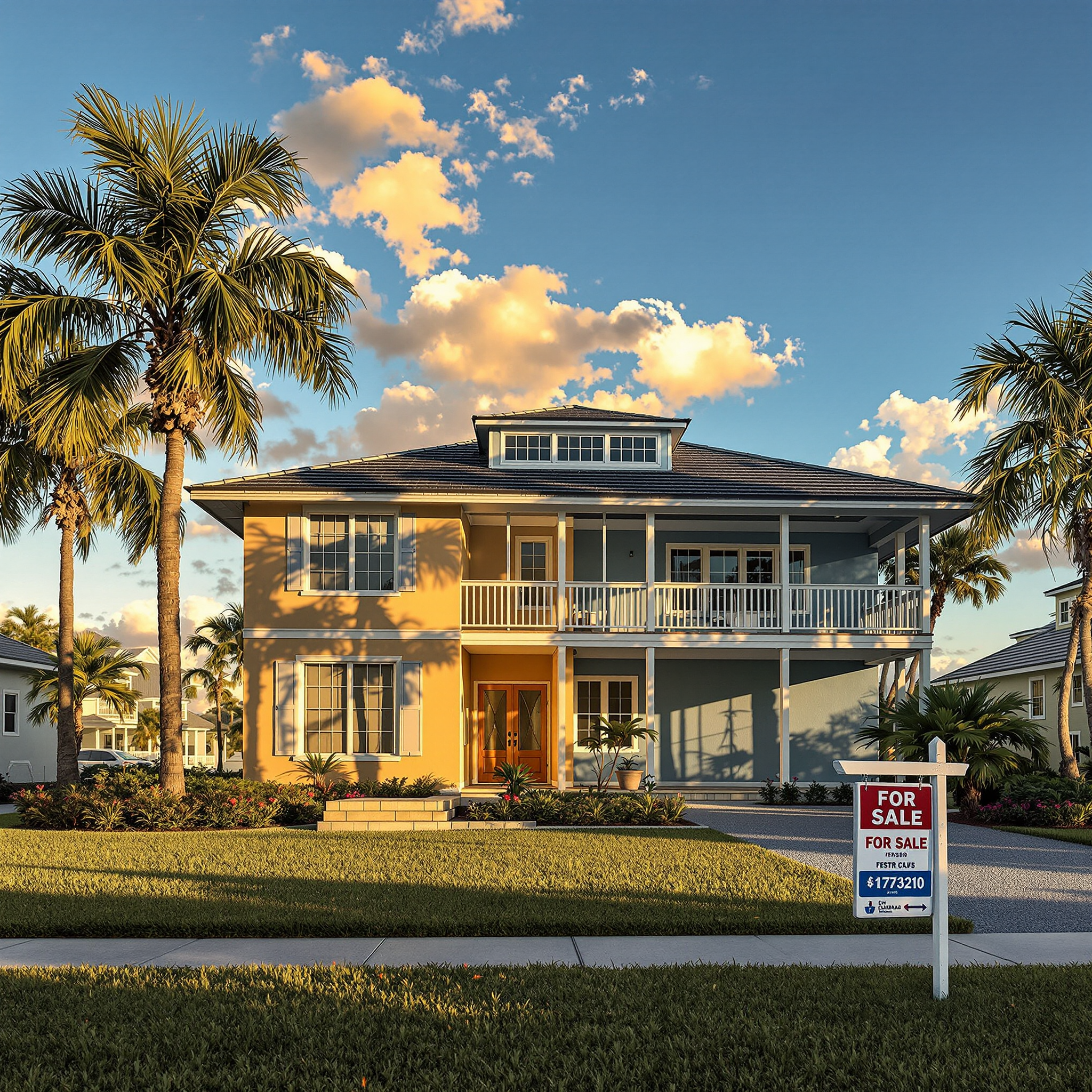
To effectively prepare a Florida home for an open house and increase its chances of selling, focus on these key steps:

1. **Deep Cleaning:** A spotless home is crucial. Homes with thorough cleaning and decluttering sell for an average of $3,000 – $5,000 more.

2. **Declutter and Depersonalize:** Remove 80% of personal items. Clutter distracts buyers; staged homes show approximately a 6-10% increase in sales price.

3. **Boost Curb Appeal:** Manicured lawns and fresh paint significantly improve first impressions. 76% of realtors believe curb appeal is critical in attracting buyers.

4. **Stage Strategically:** Focus on key areas like the living room, kitchen, and master bedroom. Staged homes sell 73% faster than non-staged homes.

5. **Address Repairs:** Fix any minor issues, like leaky faucets or cracked tiles. 40% of buyers cite repairs as a deterrent.

6. **Optimize Lighting:** Maximize natural light and add strategic artificial lighting. Well-lit homes create a welcoming atmosphere.

7. **Highlight Key Features:** Showcase unique selling points, like updated appliances or waterfront views. 85% of buyers find these features important when making a decision.


25 Apr, 2025

Florida mortgage rates are influenced by national trends but can vary slightly. As of late 2024, rates are fluctuating in response to inflation and Federal Reserve policy. The average 30-year fixed mortgage rate in Florida mirrors the national average, hovering around 7-8%, but can differ based on location and lender. Rising rates reduce affordability, impacting home sales which have seen a slight decrease in some Florida markets. Factors affecting rates include credit score, down payment size, and loan type. Refinancing activity is currently low due to higher interest rates. Expert forecasts suggest continued volatility, with potential for modest decreases depending on economic data.

25 Apr, 2025

What if your client called the CFPB about a servicing issue, or any issue, and no one answered? Things are changing, but for a thorough write up on the current situation, check out Debra Gaveglio & Donna Schmidt’s “Harmonizing Regulatory Compliance and Industry Perspectives: Leveraging Consumer Protection and Mortgage Servicing Loss Mitigation.” At its peak, the Consumer Finance Protection Bureau had about 1,700 staff. Talk in recent months of a reduction in force of 1,500 takes the number down to about 200, with authorities saying the focus of those 200 will be on “actual harm done to consumers.” It was originally envisioned that the CFPB would see harm, create a solution, and then plan it out using industry consensus. Depending on who has been in charge of the CFPB, this may or may not have happened. In fact, the CFPB has followed politics in swinging from one extreme to another, not really helping borrowers or reducing lender’s compliance costs. It is rumored, with anecdotal tales, that many CFPB employees have already gone to work at the state level, which is interesting in that the states regularly come to the CFPB for interpretations of regulations. What if Texas or California or Florida have a question about the Ability to Repay verbiage, call the CFPB, and there is no one there to pick up the phone? (Today’s podcast can be found here and this week is sponsored by nCino, makers of the nCino Mortgage Suite for the modern mortgage lender. nCino Mortgage Suite’s core products unite the people, systems, and stages of the mortgage process. Hear an interview with Friday Harbor’s Theo Ellis and Jesse Collins on raising funds for mortgage technology in the current climate.)

24 Apr, 2025

– Florida homeowners refinance to lower interest rates, shorten loan terms, tap into equity, or switch loan types.
– Interest rates are a primary driver; even a small reduction (0.5% – 1%) can save thousands over the life of a loan.
– Common refinance options include rate-and-term, cash-out, and streamline refinancing.
– Rate-and-term refinancing focuses on securing a lower interest rate or adjusting the loan term.
– Cash-out refinancing replaces the existing mortgage with a larger one, providing the borrower with cash but increasing the loan amount.
– Streamline refinancing (often VA or FHA) typically requires less documentation and appraisal.
– Florida’s average mortgage rate fluctuates; comparing current rates to the existing rate is crucial. (Refer to sources such as Bankrate, Freddie Mac, etc. for real-time figures)
– Closing costs for refinancing in Florida typically range from 2% to 5% of the loan amount, impacting overall savings.
– Break-even point: Calculate how long it takes for monthly savings to offset the refinancing costs.
– Consider prepayment penalties on the existing mortgage, as these can diminish refinance benefits.
– Tax implications of refinancing vary; consult with a tax advisor.

24 Apr, 2025

“I hate it when I see an old person and then realize we went to high school together.” Nothing lasts forever, not top lenders or even computer companies. We may reach the point where only old people remember Tandem Computers, Commodore Business Machines, or Fairchild Semiconductor, all thought to be invincible in their time. Is Intel a measure of our economic health? Intel is laying off 21,000 employees. Now, all the talk is AI (see Thought Piece below). AI, of course, does not create new knowledge. Here’s a study showing that AI search engines invent sources and lie for ~60% of queries. Interestingly, OpenAI and Google are asking the government to let them train AI on content they don’t own. Google is shipping the latest “experimental” features of its Gemini 2.0 Flash AI model to more developers across all regions, and people are finding some concerning abilities that include editing out watermarks from photos. The company’s lightweight localized on-device AI model is now equipped with native image generation that can not only produce pictures from a text prompt but also let you conversationally edit images. Users found that it can also remove watermarks with precision, TechCrunch reports. Is that the right thing to do? (Today’s podcast can be found here and this week is sponsored by nCino, makers of the nCino Mortgage Suite for the modern mortgage lender. nCino Mortgage Suite’s core products unite the people, systems, and stages of the mortgage process. Hear an interview of nCino’s Casey Williams on some of the biggest opportunities lenders have to speed things up during the origination process, and technology’s role in that transformation.)

23 Apr, 2025

Florida’s real estate market is currently experiencing a correction after a period of rapid growth.

* **Inventory:** Increased significantly year-over-year in many major metro areas, offering buyers more choices. Single-family inventory is up approximately 55% statewide.
* **Price Growth:** Slowing down compared to 2021-2022. Some areas are seeing price reductions. Overall median sales prices are still up, but at a much slower pace than previously recorded.
* **Interest Rates:** Remain elevated compared to recent years, impacting affordability and buyer demand. The average 30-year fixed mortgage rate is hovering around 7%.
* **Days on Market:** Increasing, indicating a shift towards a more balanced market. Properties are staying on the market longer.
* **Sales Volume:** Decreasing year-over-year, suggesting reduced buyer activity. Closed sales are down nearly 20% statewide from last year.
* **Seller Strategy:** More sellers are offering concessions (e.g., closing cost assistance) to attract buyers.
* **Regional Differences:** Market conditions vary significantly across different regions and cities within Florida. Coastal areas are generally more resilient, but still impacted.
* **Investment:** Investors are becoming more cautious, seeking deals and factoring in higher financing costs.
* **Population Growth:** Florida continues to experience population growth, which supports long-term real estate demand. However, migration patterns are shifting.

23 Apr, 2025

“I won a million dollars and donated a quarter of it to charity! I now have $999999.75 left.” Money can be funny… or not. In the past, a “flight to quality” or “flight to safety” didn’t involve feckless investors searching for a place to park their money when there was turmoil in the world. It usually involved buying securities issued in the United States, like bonds or MBS. That has changed, hence gold hitting $3,400 dollars an ounce, prompting analysts to wonder if the United States’ (which in the past was the world’s strongest economy) dollar is still thought of as the world’s reserve currency. Despite U.S. stocks being down 10 percent this year, U.S. bond prices and interest rates have done little. Will we only care if it impacts our borrowers? Perhaps. The spring homebuilding season is slower than usual, with housing starts are down 11.4 percent in March month-over-month. Direct and indirect reverberations from tariffs are an element of this; while 7 percent of goods that go into residential construction are imported, economic concerns about the health of the economy are a fairly large factor in the decision whether or not to buy a new home. (Today’s podcast can be found here and this week is sponsored by nCino, makers of the nCino Mortgage Suite for the modern mortgage lender. nCino Mortgage Suite’s core products unite the people, systems, and stages of the mortgage process. Hear an interview with dataQollab’s Adam Quinones on how traders are making sense of unpredictability in markets recently.)

22 Apr, 2025

Florida mortgage rates generally mirror national trends but can be slightly higher. As of late 2024, mortgage rates in Florida are exhibiting volatility, influenced by factors like inflation, Federal Reserve policy, and economic growth. The average 30-year fixed mortgage rate in Florida hovers around the national average. Rate fluctuations impact housing affordability and demand. Higher rates can lead to decreased home sales and price stagnation, while lower rates can stimulate the market. Potential Florida homebuyers should monitor rate changes closely and consult with mortgage professionals for personalized advice. Local economic conditions can also influence Florida-specific mortgage rates.

22 Apr, 2025

“My boss pulled up in his brand-new BMW today and I couldn’t help but admire it. “Nice car,” I said as he got out. “Well,” he said, noticing my admiring looks, “Work hard, put the hours in, and I’ll have an even better one next year.” A relationship with one’s boss is an interesting thing. Thank you to Ken S. who passed along, “Can Trump fire Fed chair Jerome Powell?” (Probably not without the Supreme Court.) The U.S. economy could slow unless interest rates are lowered immediately, President Trump said yesterday, repeating his criticism of Federal Reserve Chair Jerome Powell, who says rates should not be lowered until it is clearer Trump’s tariff plans won’t lead to a persistent surge in inflation. “With these costs trending so nicely downward, just what I predicted they would do, there can almost be no inflation, but there can be a SLOWING of the economy unless Mr. Too Late, a major loser, lowers interest rates, NOW,” Trump said in a post on Truth Social. The economy is only one part of the Trump Administration changes, and Attorney Brian Levy’s latest Mortgage Musings is out, loaded with explanations about the CFPB whipsawing and some scary prospects for the GSEs. He also discusses the shadowy new unregulated world of fast-food financing. (Today’s podcast can be found here and this week is sponsored by nCino, makers of the nCino Mortgage Suite for the modern mortgage lender. nCino Mortgage Suite’s core products unite the people, systems, and stages of the mortgage process. Hear an interview with Polunsky Beitel Green’s Peter Idziak on IMBs expanding into territory traditionally reserved for depositories and overall lender expansion into a fuller suite of products out of competitive necessity.)

21 Apr, 2025

* **Florida Homeownership Rate:** Roughly 68% (fluctuates based on economic conditions and migration patterns).
* **Median Home Price (2024):** Varies greatly by region, but statewide median is ~$400,000 – $450,000. Coastal areas significantly higher.
* **Property Taxes:** Average effective property tax rate around 0.85% – 1.1%, but homestead exemption can lower the tax burden for primary residences.
* **Insurance:** High insurance costs due to hurricane risk; average homeowner insurance premium ~$6,000 per year (can be much higher in high-risk zones). Flood insurance is often required.
* **Down Payment Assistance:** State and local programs offer assistance to first-time homebuyers.
* **Closing Costs:** Typically range from 2% to 5% of the purchase price.
* **Popular Markets:** High demand in areas like Tampa, Orlando, Miami, Jacksonville, and Southwest Florida, driving up prices.
* **Seller’s Market Dynamics:** Florida often experiences seller’s market conditions due to population growth and demand, resulting in competitive bidding and faster sales.
* **Disclosure Requirements:** Sellers must disclose known material defects affecting the property’s value.
* **Real Estate Agents:** Utilizing a real estate agent is common; commissions typically range from 5% to 6% of the sale price, split between the buyer’s and seller’s agents.
* **Thriving Considerations:** Managing hurricane preparedness, understanding HOA rules (if applicable), and budgeting for ongoing maintenance are critical for thriving.
* **Growth:** Florida experiences substantial population growth, impacting housing supply and affordability.